
How to Treat and Prevent Plantar Warts
- posted: Aug. 29, 2024
HPV, or the human papillomavirus, causes plantar warts. According to Dr. My Hoa Kaas and Dr. Jay Ryan of Virginia Foot and Ankle Center in Fairfax, VA, plantar warts, which can be stubborn to treat, have the potential to be painful as they typically appear on the foot’s sole.
How to Identify a Plantar Wart?
Plantar warts appear in various shapes and sizes. These foot issues can create discomfort and pain and can be exacerbated by walking, standing, or participating in weight-bearing activities.
Plantar Warts Symptoms
- A tiny, granular, and uneven growth that typically develops on the bottom of the foot. Note that it is commonly found –
- On the toes.
- The front of the foot.
- In and around the heel.
- Pain/discomfort when squeezing the outside borders of the wart.
- The wart has dark/black spots and disrupts normal skin on the foot.
- Hard, yellowish-colored skin.
- Pain/discomfort when walking if the wart impacts weight-bearing activities.
Plantar Warts Podiatric Treatment Options
The approach to plantar warts is determined by where the wart is located and how severe the condition might be. These include the following -
- OTC Medication.
- Prescription Meds.
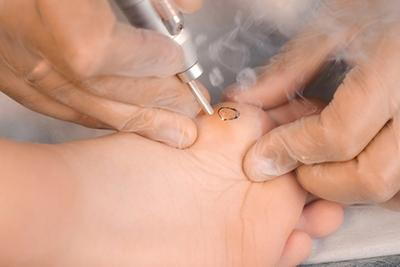
- Laser Therapy.
- Cryotherapy.
- Immune Therapy.
- Surgery, if necessary.
While self-treatment opportunities are available, it is sensible to seek the evaluation of a podiatric doctor to ensure the diagnosis is correct.
Preventing Plantar Warts
Often, the best approach to managing plantar warts is to proactively prevent them from happening/occurring –
Avoid Direct Contact -
- Wear flip-flops or shower shoes when using a public locker room, public shower, and near swimming pools.
- Avoid sharing clothing and items that may cause cross-contamination – i.e., towels, socks, or shoes, to name a few.
Foot Care -
- Moisture has the potential to create a wart, so it is smart to wear moisture-wicking socks. Note – if feet sweat throughout the day, changing socks may help.
- Make sure the shoes you choose/wear fit well, as this helps to avoid pressure points where warts have the potential to form.
Boost Immune System -
- A healthy immune system helps one’s body fight the HPV virus.
- Choose to eat a balanced diet, get sufficient sleep, and proactively manage stress.
Monitor Skin Health -
- Routinely inspect your feet for skin issues – including indications of warts.
Note that early identification and treatment can prevent plantar warts from spreading.
Contact a Leading Fairfax, VA, Footcare Specialist Near You Today
If you are experiencing foot discomfort or have a suspicion that you may have a plantar wart, contact Dr. Kaas, Dr. Ryan, or a staff member of the Virginia Foot and Ankle Center at (703) 205-0770 or online.
- posted: Aug. 29, 2024
HPV, or the human papillomavirus, causes plantar warts. According to Dr. My Hoa Kaas and Dr. Jay Ryan of Virginia Foot and Ankle Center in Fairfax, VA, plantar warts, which can be stubborn to treat, have the potential to be painful as they typically appear on the foot’s sole.
How to Identify a Plantar Wart?
Plantar warts appear in various shapes and sizes. These foot issues can create discomfort and pain and can be exacerbated by walking, standing, or participating in weight-bearing activities.
Plantar Warts Symptoms
- A tiny, granular, and uneven growth that typically develops on the bottom of the foot. Note that it is commonly found –
- On the toes.
- The front of the foot.
- In and around the heel.
- Pain/discomfort when squeezing the outside borders of the wart.
- The wart has dark/black spots and disrupts normal skin on the foot.
- Hard, yellowish-colored skin.
- Pain/discomfort when walking if the wart impacts weight-bearing activities.
Plantar Warts Podiatric Treatment Options
The approach to plantar warts is determined by where the wart is located and how severe the condition might be. These include the following -
- OTC Medication.
- Prescription Meds.
- Laser Therapy.
- Cryotherapy.
- Immune Therapy.
- Surgery, if necessary.
While self-treatment opportunities are available, it is sensible to seek the evaluation of a podiatric doctor to ensure the diagnosis is correct.
Preventing Plantar Warts
Often, the best approach to managing plantar warts is to proactively prevent them from happening/occurring –
Avoid Direct Contact -
- Wear flip-flops or shower shoes when using a public locker room, public shower, and near swimming pools.
- Avoid sharing clothing and items that may cause cross-contamination – i.e., towels, socks, or shoes, to name a few.
Foot Care -
- Moisture has the potential to create a wart, so it is smart to wear moisture-wicking socks. Note – if feet sweat throughout the day, changing socks may help.
- Make sure the shoes you choose/wear fit well, as this helps to avoid pressure points where warts have the potential to form.
Boost Immune System -
- A healthy immune system helps one’s body fight the HPV virus.
- Choose to eat a balanced diet, get sufficient sleep, and proactively manage stress.
Monitor Skin Health -
- Routinely inspect your feet for skin issues – including indications of warts.
Note that early identification and treatment can prevent plantar warts from spreading.
Contact a Leading Fairfax, VA, Footcare Specialist Near You Today
If you are experiencing foot discomfort or have a suspicion that you may have a plantar wart, contact Dr. Kaas, Dr. Ryan, or a staff member of the Virginia Foot and Ankle Center at (703) 205-0770 or online.
Virginia Foot & Ankle Center
2826 Old Lee Hwy Ste 220,
Fairfax, VA 22031